Lawn Fertilization in Cary, Apex & Holly Springs
A minimum of seven treatments a season — pre- and post-emergent, fungicide, grub and armyworm control.
Get Your Free Lawn Care QuoteGet Your Free Quote
Enter your address to start
Where should we send your price?
We'll confirm your exact number — usually the same day.
Pick your lawn size
Closest guess is fine — we measure precisely before your final quote.
Here's your price based on what you picked:
Thanks — we've got it! 🌱
We'll reach out shortly — usually the same day — with your exact price. Keep an eye on your phone and email.
We're Growing Your Way!
You're just outside our current service area — but we're expanding fast. Leave your info and we'll reach out the moment we cover your neighborhood.
In the meantime: (919) 796-8626 · stonecreeklandscaping@gmail.com
By continuing, you agree Stone Creek Landscaping may contact you about your request by phone, text, or email. Reply STOP to opt out.
Why a program beats spot treatment
A bag of fertilizer from a big-box store is not wrong, it is just undated. The product that helps a bermuda lawn in July is the product that hurts a fescue lawn in July, and the pre-emergent that stops crabgrass is worth almost nothing if it goes down after the crabgrass is already up.
Our fertilization and weed control program goes beyond a normal feeding and pre- and post-emergent schedule. It runs a minimum of seven treatments a season, timed through the year, and fungicide, grub and armyworm control are part of the same plan rather than an emergency call after damage shows.
We are a family-owned local business, not a national chain working off a regional calendar. That matters here more than it would in a simpler climate — the Triangle sits in the transition zone, where both cool-season and warm-season grasses are grown and neither is perfectly adapted.
The right product, at the right time, for the grass you actually have.
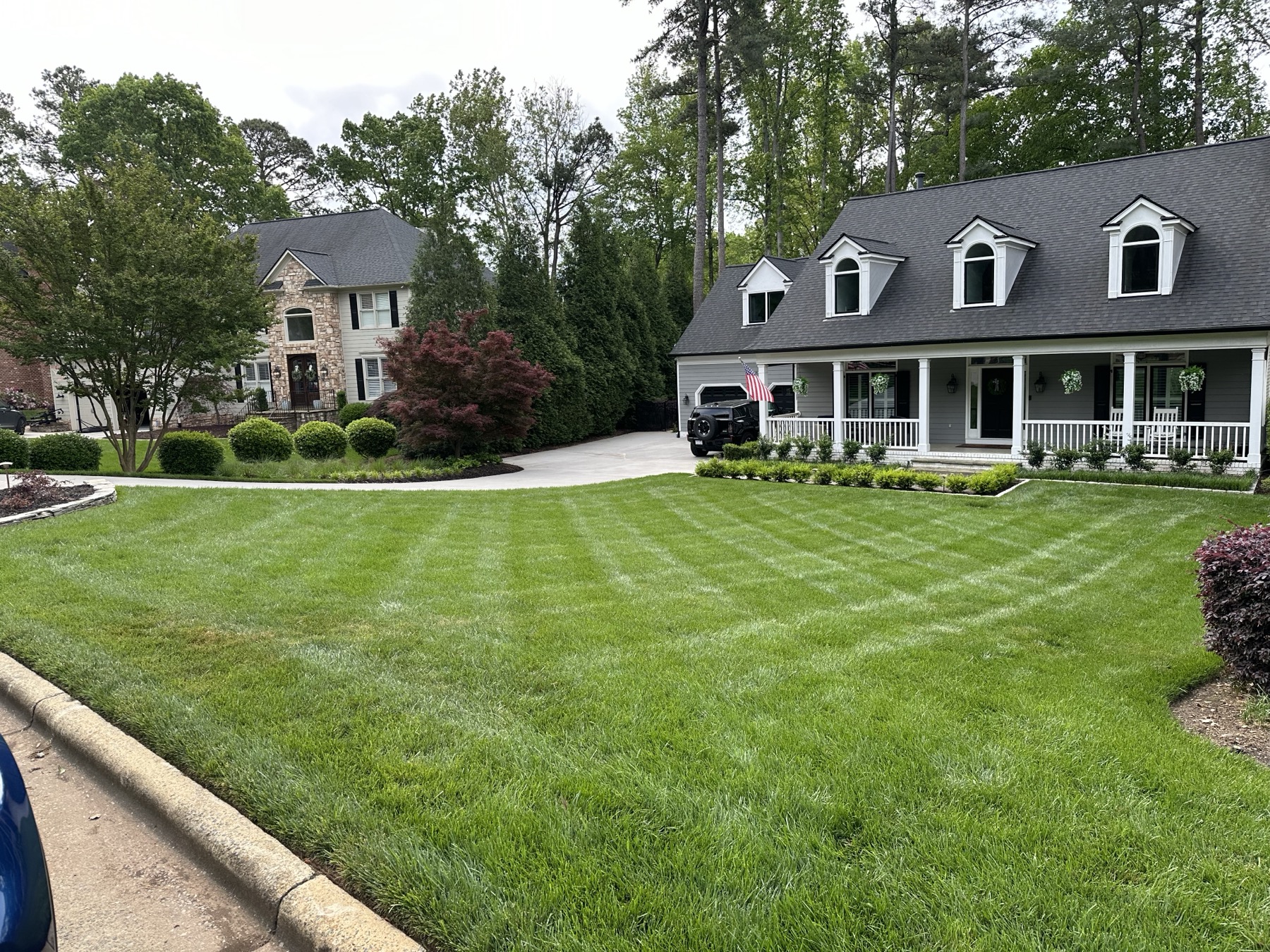
What's Included
How we build your schedule
Four steps, starting with identifying what you are actually growing.
Identify the grass
Tall fescue, bermuda or zoysia — each one wants a different calendar. This is the first question, not an afterthought.
Set the timing
Pre-emergent before soil temperatures rise, feedings matched to when your grass type is actually growing, not when the calendar says spring.
Treat through the season
Scheduled rounds, with post-emergent for breakthrough weeds as they appear.
Add protection when needed
Fungicide, grub and armyworm control added where disease or insect pressure justifies it — not applied to every lawn by default.
Fertilization & Weed Control FAQs
How often does a Triangle lawn need fertilization?
Does the program include weed control?
Why not fertilize my fescue in the middle of summer?
Get Your Free Lawn Care Quote
Tell us your address and lot size and we will come look at the property — most quotes come back the same day.